





The following transcript has been edited for clarity.
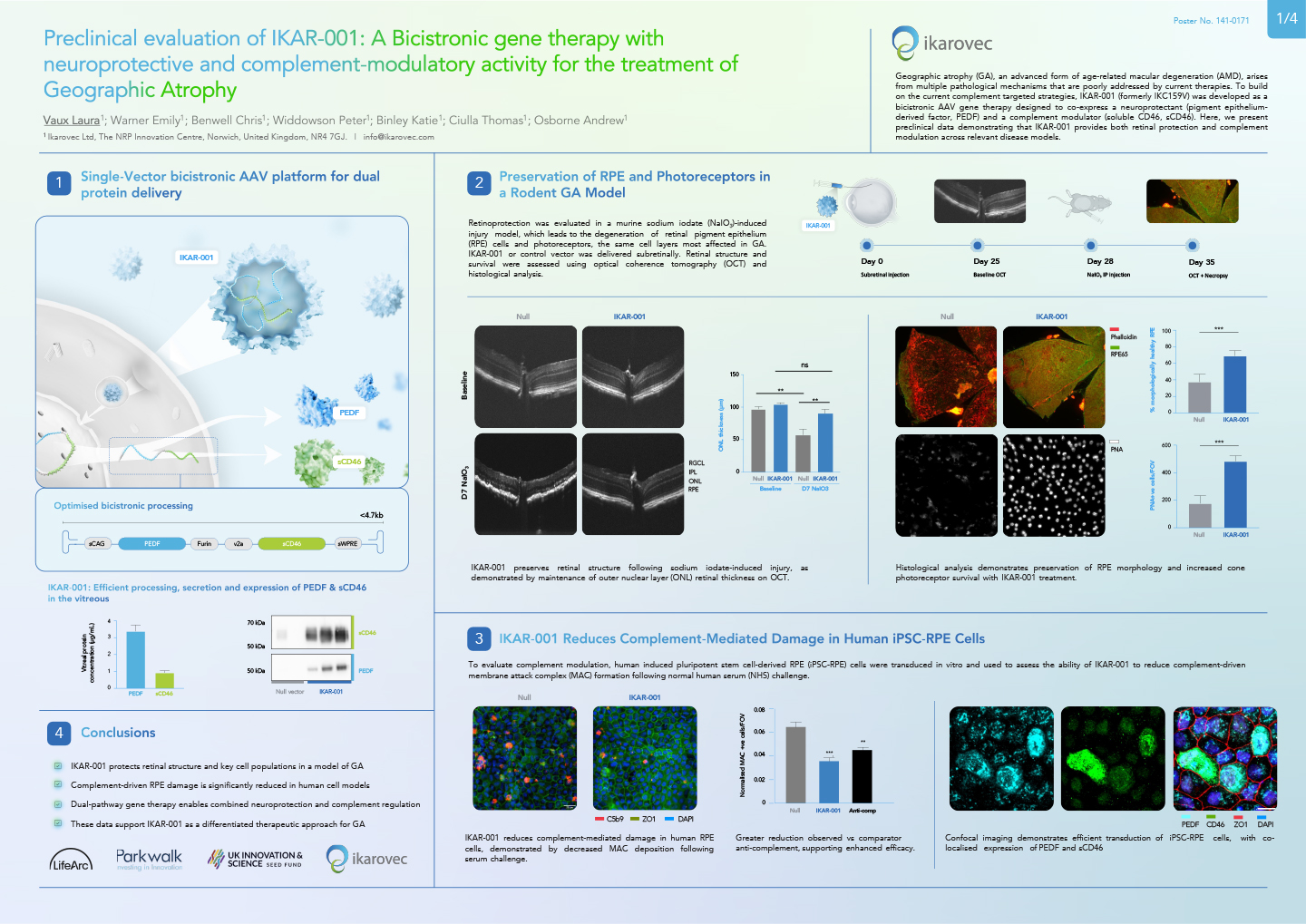
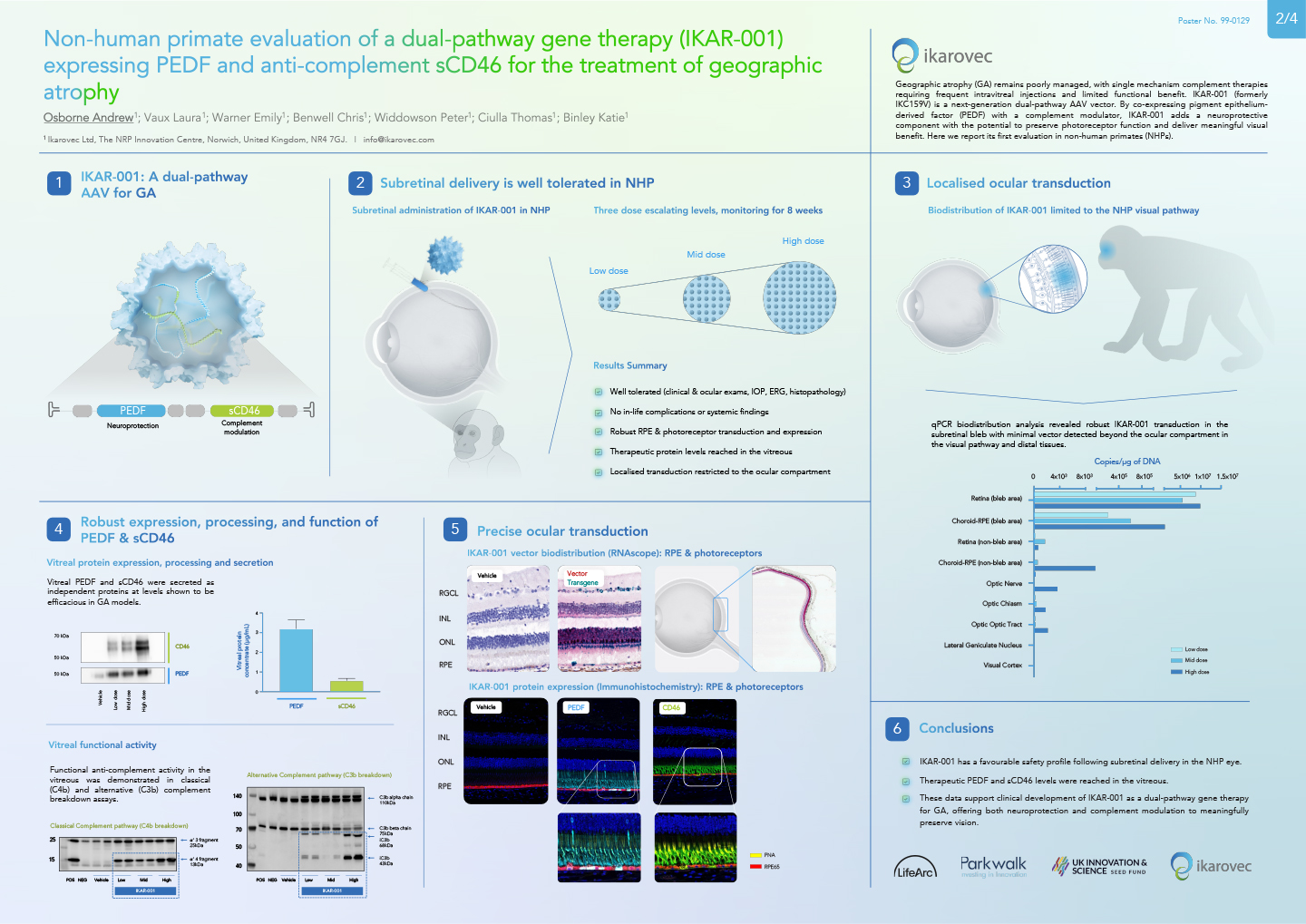
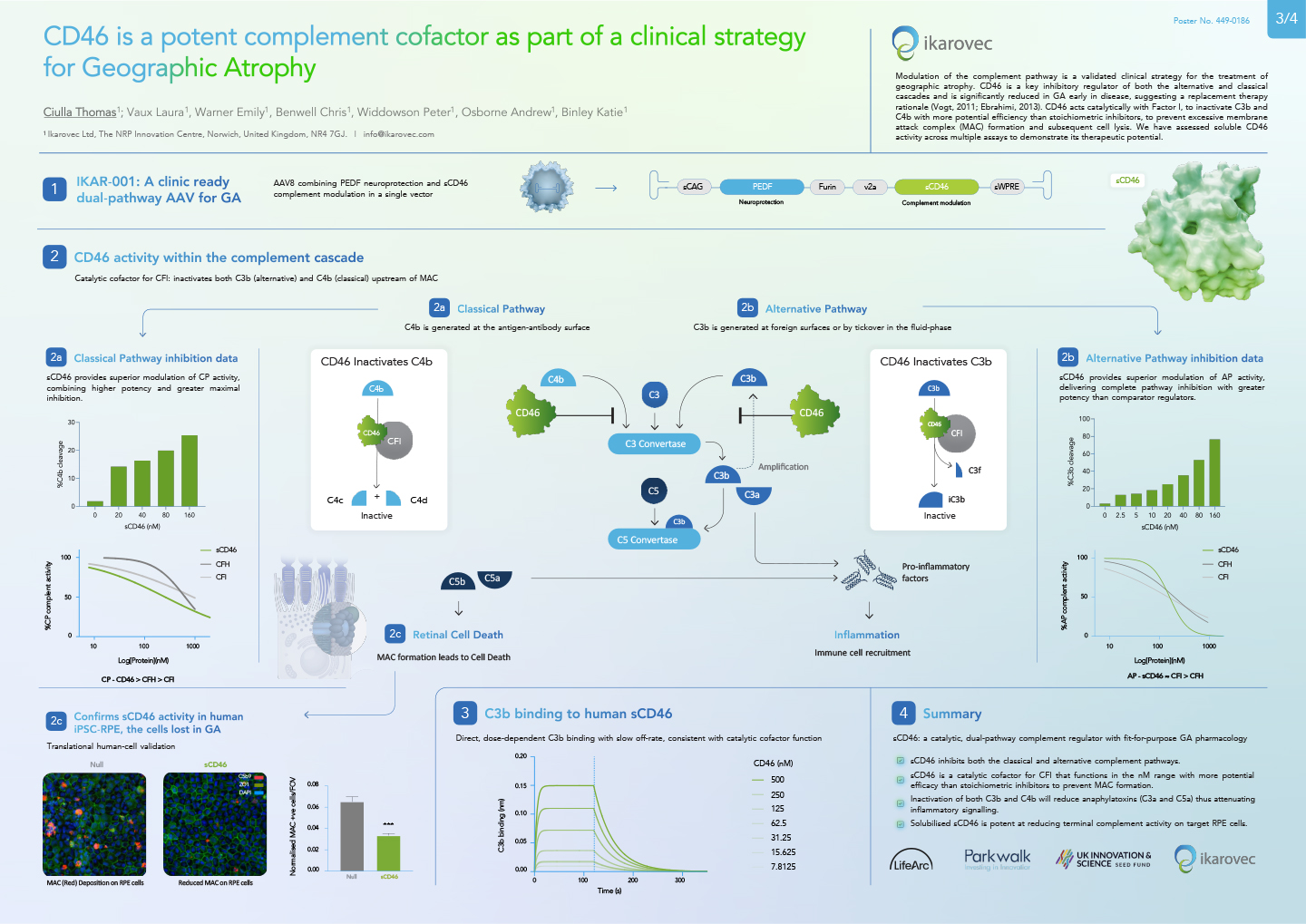
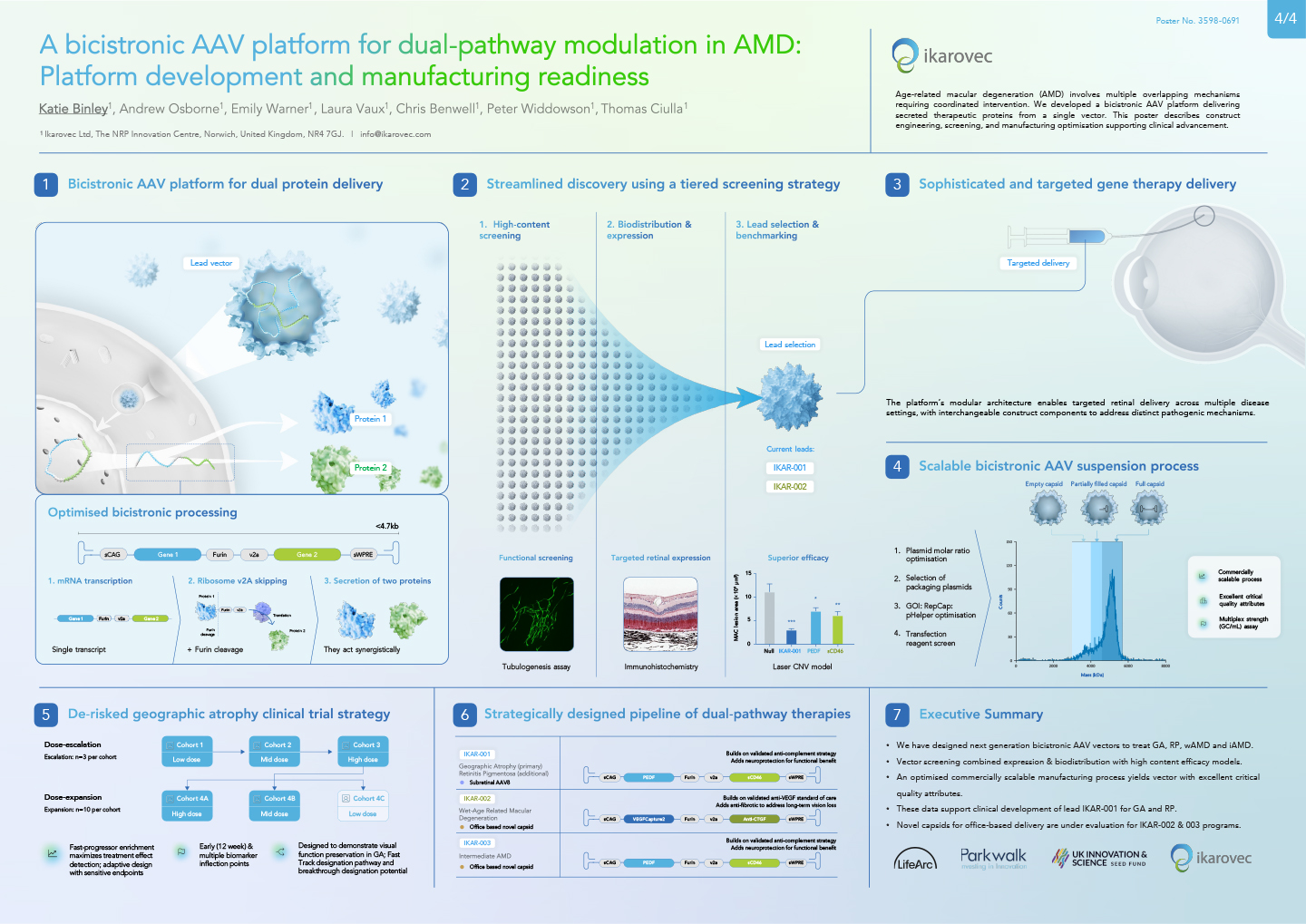
Hi, my name is Katie Binley, PhD. I’m the chief scientific officer (CSO) at Ikarovec, which is a UK-based biotech company, and we’re developing dual-pathway gene therapies for retinal degenerative diseases. We've developed a bicistronic gene therapy platform that uses a linker technology to express 2 independently acting therapeutic proteins from a single vector. And in this way, we’re hoping to build on validated pathways while adding in a second synergistic mechanism of action that addresses what current single pathway therapies miss.
So at ARVO this year, we’re presenting several posters on our lead program, called IKAR-001, which is a one-time gene therapy for geographic atrophy (GA) that co-expresses pigment epithelium-derived factor (PEDF) for neuroprotection and soluble CD46 for complement modulation. With this approach, we are building on the complement inhibitors that have clearly validated complement dysregulation as a disease-modifying pathway to treat GA.
However, the magnitude of effect of these single pathway therapies remains modest, and there’s really, I believe, inconsistent, meaningful improvements in visual function. This suggests, I think, that we’ve reached a ceiling effect with these single-pathway approaches for GA, especially those focused on targeting complement or inflammation. And it’s probably not really surprising, because we know that GA is inherently multifactorial. So really, to move the needle, where we need to go next is to address these multiple pathways simultaneously. That’s where the next-generation gene therapies come in. We can target multiple pathways with a single vector, and we’ve moved to more sophisticated biology-driven therapies, particularly gene therapies, which can offer a durable long-term effect.
In the context of GA, I think neuroprotection is especially important, because without directly addressing neurodegeneration it's difficult to achieve meaningful functional outcomes. And in fact, neuroprotection is increasingly recognized as a critical component in treating GA, and we’re now seeing meaningful validation of this approach. So first, we have Encelto (Neurotech Pharmaceuticals), which is an encapsulated cell therapy that expresses a neuroprotective protein called CNTF. That's a neuroprotective for MacTel. Second, at ARVO this year, there's an abstract by Murakami that's being presented that shows positive human clinical data with a PEDF gene therapy in retinitis pigmentosa.1 And this is really significant because it reports 36-month outcomes in a clinical trial demonstrating significant slower decline in visual acuity and foveal sensitivity in treated vs fellow eyes.
So, because Ikarovec’s gene therapy aims to provide both anatomical and functional benefit, it really represents, I think, the next generation of treatment for GA and potentially other retinal diseases as well. RP
Reference
1. Murakami Y, Hisai T, Mawatari G, et al. Long-term outcomes of lentivirus-based neuroprotective gene therapy for retinitis pigmentosa: a phase 1/2a investigator-initiated clinical trial of DVC1-0401. Presented at: Association for Research in Vision and Ophthalmology annual meeting; May 3-7, 2026; Denver, Colorado.