




The therapeutic landscape for neovascular age-related macular degeneration (nAMD) is evolving. Therapies targeting vascular endothelial growth factor (VEGF) were among the first to show efficacy in treating nAMD.1-5 Newer therapies, such as aflibercept 8 mg (Eylea HD; Regeneron)5 and faricimab (Vabysmo; Genentech),6 are designed to provide longer durability, allowing for extended dosing intervals.
Several next-generation biologics and gene therapies for nAMD are currently under investigation. Next-generation biologics include engineered antibodies, fusion proteins, and multitarget peptides. Gene therapies use viral or RNA-based vectors to enable sustained intraocular production of therapeutic proteins. This article provides an overview of these emerging therapeutics.
Multitargeted Therapies
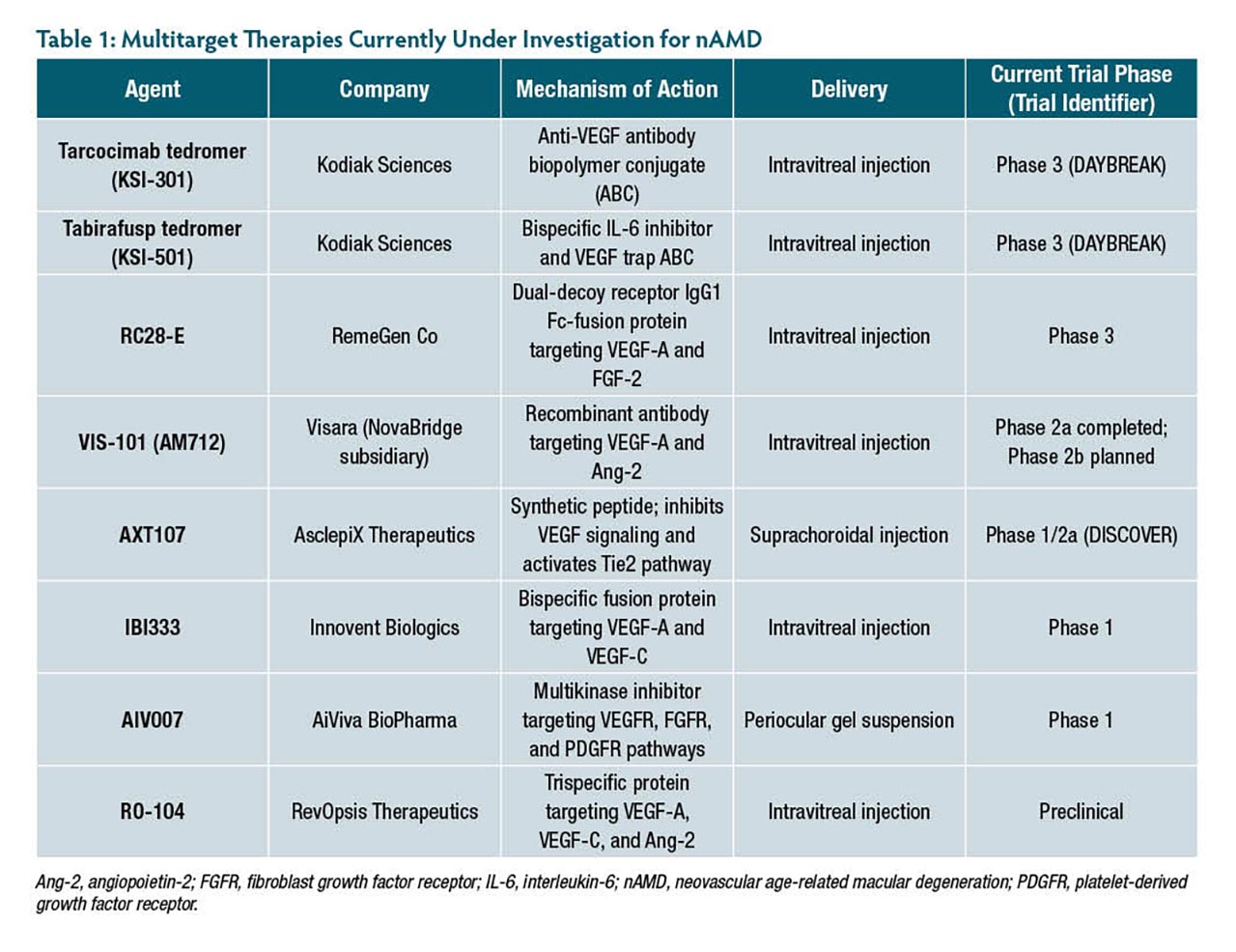
VEGF is not the sole driver of disease activity in nAMD. Multitargeted therapies are designed to modulate 2 or more complementary biologic pathways involved in angiogenesis, vascular permeability, inflammation, or vascular stabilization (Table 1). These agents may combine VEGF inhibition with blockade of additional growth factors like VEGF-C/D or fibroblast growth factor (FGF), inflammatory mediators like interleukin-6 (IL-6), or vascular destabilizers like angiopoietin-2 (Ang-2). They may also simultaneously activate stabilizing pathways, such as Tie2.
Tarcocimab tedromer (KSI-301; Kodiak Sciences) is an anti-VEGF antibody biopolymer conjugate (ABC). This intravitreal therapy showed noninferior visual acuity gains compared to aflibercept in the DAYLIGHT trial.7 It is currently being studied in the DAYBREAK phase 3 trial, along with tabirafusp tedromer (KSI-501), a bispecific IL-6 inhibitor and VEGF trap ABC. The 2 investigational arms receive 4 monthly loading doses, followed by individualized dosing, whereas the aflibercept 2 mg comparator arm is dosed per label. The primary endpoint is mean change in best-corrected visual acuity (BCVA) from baseline to week 48. Preliminary data are expected later this year, with the study estimated to be completed by August 2027.
RC28-E (RemeGen Co) is a novel dual-decoy receptor immunoglobulin G (IgG) 1 Fc-fusion protein that simultaneously blocks both VEGF-A and FGF-2. A phase 1b trial demonstrated a favorable safety profile with improvements in BCVA and anatomical outcomes.8 A phase 3 trial comparing intravitreal RC28-E with aflibercept is currently under way.
AXT107 (AsclepiX Therapeutics) is a synthetic peptide derived from collagen IV with a dual mechanism of action: it suppresses VEGF signaling and activates the Tie2 pathway. This therapy is currently being evaluated in the DISCOVER phase 1/2a trial to assess the safety of suprachoroidal injections.
IBI333 (Innovent Biologics) is a dual-action bispecific fusion protein that blocks both VEGF-A and VEGF-C. A phase 1 trial conducted in China evaluated the safety and tolerability of single and multiple intravitreal injections of IBI333. Although that trial was completed in 2024, the company has not reported further development steps.
AIV007(AiViva BioPharma) is a multiple kinase inhibitor targeting VEGF receptors (VEGFR-1, -2, and -3), FGF receptors (FGFR-1, -2, -3, and -4), and platelet-derived growth factor receptors (PDGFR-α and -β). A phase 1 trial assessing the safety, pharmacokinetics, and duration of effect of periocularly administered AIV007 gel suspension in patients with neovascular AMD or diabetic macular edema (DME) is ongoing.
RO-104 (RevOpsis Therapeutics) is a trispecific protein that binds VEGF-A, VEGF-C, and Ang-2. In preclinical testing using nonhuman primate models of choroidal neovascularization (CNV), RO-104 significantly reduced vascular leakage and lesion area.9 The company has reported plans to advance to human trials.
VIS-101 is a recombinant antibody providing dual inhibition of VEGF-A and Ang-2 pathways. The drug was originally developed by AskGene Pharma (as ASKG712) and later licensed to AffaMed Therapeutics (as AM712). NovaBridge obtained development rights through its subsidiary Visara, which is advancing the therapy for retinal vascular diseases. The CONQUER phase 1 trial found intravitreal AM712 to be well tolerated with an overall favorable safety profile.10 Visara recently reported top-line data from a phase 2a study that found VIS-101 improved visual acuity and reduced retinal thickness. Based on these results, a phase 2b study is planned for later in 2026, followed by a global phase 3 program.
A multitargeted agent that is no longer being investigated in nAMD is sozinibercept (OPT-302; Opthea Ltd), a soluble form of VEGFR-3 expressed as an IgG1 Fc-fusion protein that binds and neutralizes the activity of VEGF-C and D after intravitreal injection. In March 2025, Opthea terminated the sozinibercept program after OPT-302 did not meet primary endpoints in the phase 3 COAST and ShORe trials.
Tyrosine Kinase Inhibitors
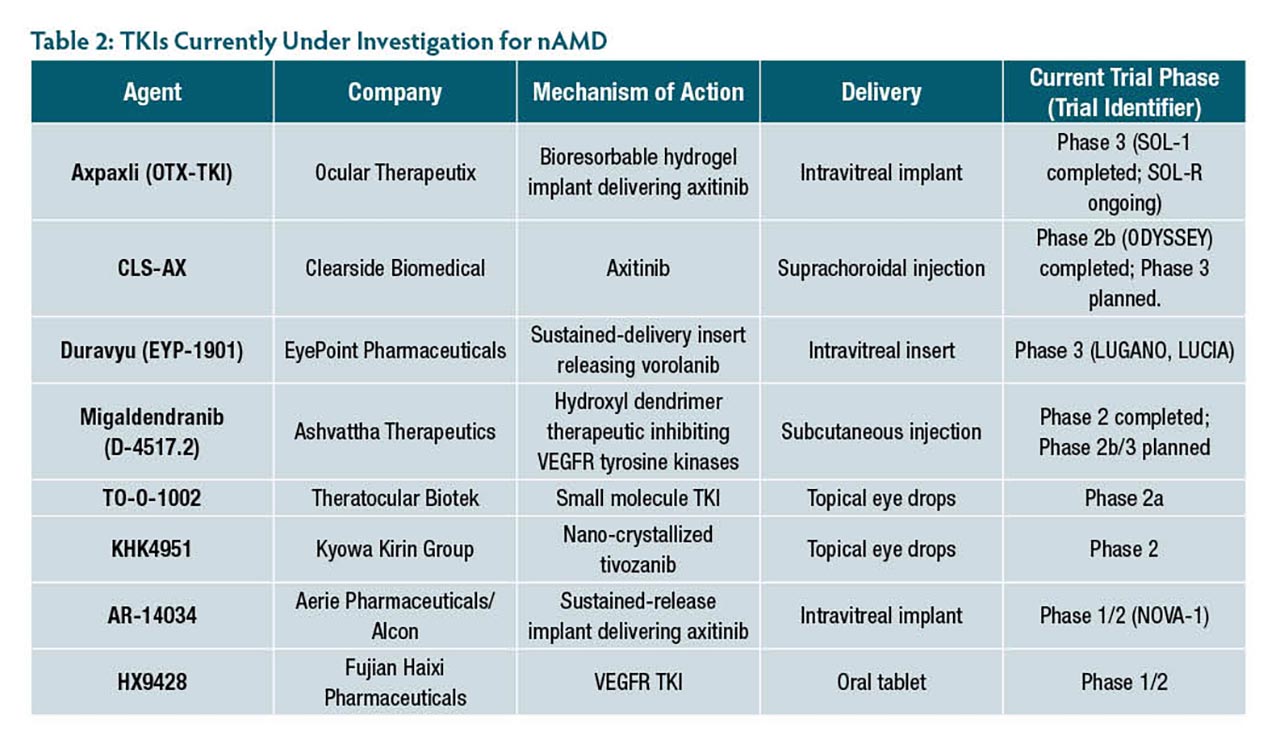
Tyrosine kinases have a critical role in regulating vascular stability, angiogenesis, and inflammation. Many current therapeutics in development inhibit the tyrosine kinases as a mechanism to inhibit neovascularization (Table 2).
Axpaxli (OTX-TKI; Ocular Therapeutix) is an investigational bioresorbable intravitreal hydrogel implant that incorporates axitinib, a small molecule tyrosine kinase inhibitor (TKI). The registrational SOL-1 phase 3 trial compared a single dose of Axpaxli to aflibercept 2 mg (Eylea; Regeneron) in treatment-naïve nAMD patients. Recently, top-line data from SOL-1 showed that Axpaxli outperformed the standard of care aflibercept, providing stable BCVA and fluid control. The SOL-1 data may be used to support a new drug application to the FDA on an accelerated pathway.11 Ocular Therapeutics is continuing with a global phase 3 trial, SOL-R, that is designed to evaluate repeat dosing of Axpaxli every 6 months vs aflibercept every 8 weeks.
CLS-AX (Clearside Biomedical) is a suprachoroidal injection of axitinib. The OASIS phase 1/2a trial found that CLS-AX was safe and well tolerated across all tested doses.12 The ODYSSEY phase 2b trial assessed the safety and efficacy of CLS-AX with a flexible dosing regimen compared with aflibercept. The top-line results showed that CLS-AX maintained stable BCVA from baseline to 36 weeks.13 The company reported alignment with the FDA on plans for 2 concurrent phase 3 noninferiority trials comparing CLS-AX to aflibercept, with a primary study endpoint of average change in BCVA from baseline at week 52.
Duravyu (EYP-1901; EyePoint Pharmaceuticals) is a sustained-delivery intravitreal insert that releases the TKI vorolanib. The DAVIO phase 1 trial showed EYP-1901 had a favorable safety profile, and the DAVIO2 phase 2 trial demonstrated that EYP-1901 reduced treatment burden by ≥80% over 12 months of supplemental aflibercept.14 The phase 3 LUGANO and LUCIA trials are currently enrolled, comparing Duravyu dosed every 6 months to aflibercept injections. The primary endpoint will be changes in BCVA at weeks 52 and 56, with secondary measures including safety and the need for supplemental injections.
Migaldendranib (D-4517.2; Ashvattha Therapeutics) is a subcutaneously administered hydroxyl dendrimer therapeutic that inhibits VEGFR tyrosine kinases. A phase 1 trial demonstrated that D-4517.2 was safe and well tolerated.15 A phase 2 trial showed that D-4517.2 maintained stable mean BCVA and central subfield thickness (CST) for 24 weeks, with a 79.9% reduction in treatment burden from supplemental aflibercept injections. In October 2025, Ashvattha reported that it had secured FDA alignment on a plan to conduct 2 phase 2b/3 studies.16
TO-O-1002 (Theratocular Biotek) is a topical eye drop delivered 3 times a day. A phase 2a trial showed patients on TO-O-1002 had an 86% reduction in the need for supplemental intravitreal anti-VEGF therapy and a favorable safety profile.17
KHK4951 (Kyowa Kirin Group) is an investigational, nanocrystallized eye drop that includes the TKI tivozanib. A phase 1 trial found a favorable safety profile.18 A phase 2 trial to assess the efficacy and safety of KHK4951 is currently recruiting.
AR-14034 (Aerie Pharmaceuticals/Alcon) is a sustained-release intravitreal implant that delivers axitinib. In preclinical studies using animal models, the implant demonstrated statistically significant reductions in retinal vessel leakage.19 The phase 1/2 NOVA-1 trial comparing the sustained-release AR-14034 implant with aflibercept is ongoing.
HX9428 (Fujian Haixi Pharmaceuticals) is a TKI in an oral tablet formulation. A phase 1/2 trial evaluating the safety, pharmacokinetics, and efficacy of oral HX9428 tablets is currently recruiting.
Other Approaches
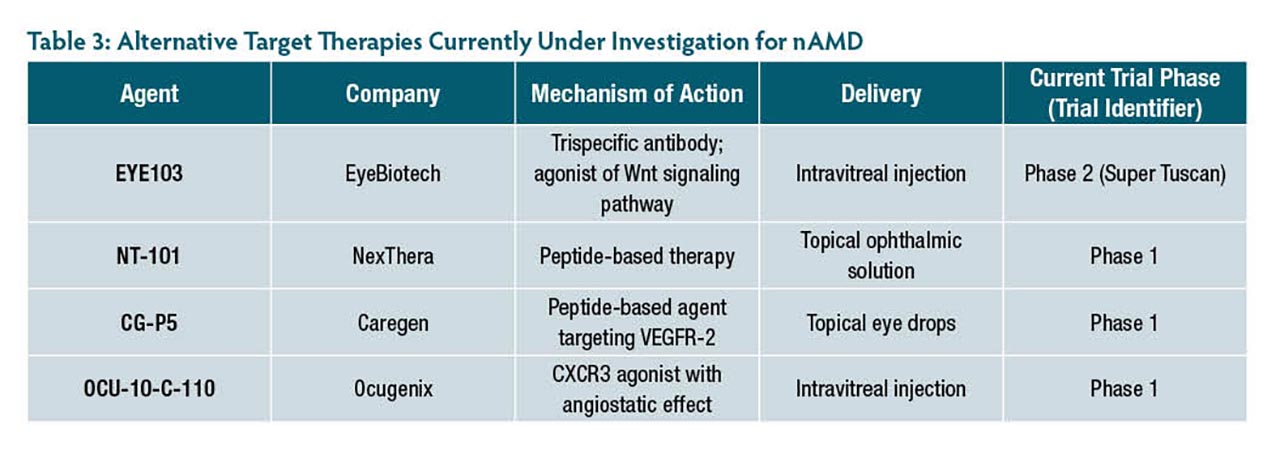
Additional therapies are under development for nAMD that target mechanisms beyond VEGF or tyrosine kinase inhibition. These approaches aim to address alternative pathways involved in angiogenesis, vascular stability, and inflammation, with the goal of improving durability, efficacy, and/or treatment burden compared with existing therapies (Table 3).
EYE103 (EyeBiotech) is an investigational, intravitreally administered trispecific antibody that acts as an agonist of the Wnt signaling pathway. The Super Tuscan phase 2 trial evaluating the safety and efficacy of low-dose and high-dose intravitreal EYE103 in patients with nAMD or macular edema following branch retinal vein occlusion is ongoing.
NT-101 (NexThera) is a noninvasive, peptide-based topical therapy. A phase 1 trial evaluating the safety and efficacy of NT-101 ophthalmic solution at 2 concentrations—a low dose of 0.05 mM and a high dose of 0.2 mM—is ongoing.
CG-P5 (Caregen) is a peptide-based eye drop that selectively binds to the VEGFR-2 receptor. A phase 1 trialevaluating the safety of CG-P5 peptide eye drops is under way.
OCU-10-C-110 (Ocugenix) activates CXCR3 to promote an angiostatic effect. A phase 1 trial evaluating the safety and tolerability of single ascending and multiple repeat intravitreal doses of OCU-10-C-110 is ongoing.
Gene Therapies
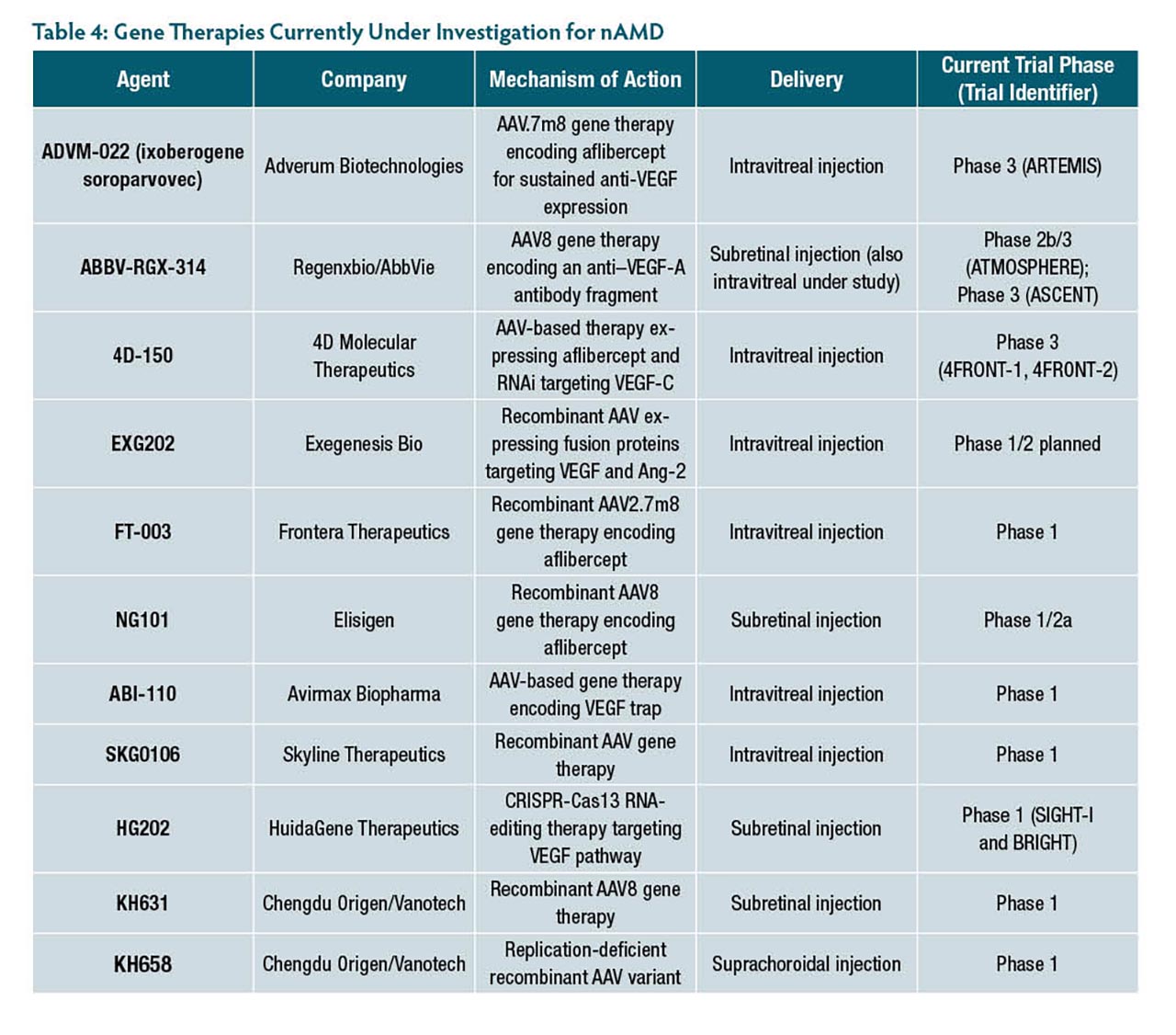
In addition to the pharmacologic therapies listed above, several gene therapies are also under investigation for nAMD (Table 4). Adeno-associated virus (AAV) vectors, in particular, offer a relatively limited immune response, the potential for long-term transgene expression, and the versatility of multiple serotypes.20 Current research has also focused on suprachoroidal and subretinal delivery approaches, which may allow targeted access, broad retinal cell transduction, and reduced exposure to the vitreous and anterior segment.21,22
ADVM-022 (ixoberogene soroparvovec [Ixo-vec]; Adverum Biotechnologies) is an intravitreal gene therapy using the AAV.7m8 capsid for continuous delivery of aflibercept. The OPTIC phase 1 trial demonstrated stable BCVA and CST, with an approximately 80% reduction in anti-VEGF treatment burden. The LUNA phase 2 trial found that ADVM-022 was well tolerated and maintained visual and anatomic outcomes through 52 weeks, with more than 50% of patients requiring no additional therapy.23 The ARTEMIS phase 3 trial is currently recruiting.
ABBV-RGX-314 (Regenxbio/AbbVie) is an investigational AAV8 vector–based gene therapy encoding an antibody fragment designed to inhibit VEGF-A. A phase 1/2a trial of subretinal delivery demonstrated stable BCVA and CST, with few or no supplemental anti-VEGF injections required in most participants.24 Top-line results from the ATMOSPHERE phase 2b/3 trial, which is being conducted in the United States, as well as the global ASCENT phase 3 trial are expected toward the end of 2026.
4D-150 (4D Molecular Therapeutics, 4DMT) is an AAV-based therapy that expresses both aflibercept and an RNA interference (RNAi) molecule targeting VEGF-C, thereby suppressing multiple angiogenic pathways, including VEGF-A, VEGF-B, VEGF-C, and placental growth factor. In the PRISM phase 1/2 program studying intravitreal 4D-150, 4DMT has reported substantial reduction in supplemental anti-VEGF treatment burden with generally stable BCVA and CST, citing an approximately 81% reduction in annualized injection burden.25 Enrollment has been completed for 4FRONT-1, a phase 3 clinical trial that compares a single intravitreal injection of 4D-150 with aflibercept 2 mg administered every 8 weeks. Top-line data are expected in 2027, according to the company. A second phase 3 trial, 4FRONT-2, is currently enrolling both treatment-naïve and recently diagnosed treatment-experienced patients in 14 countries with data expected in 2027.
EXG202 (Exegenesis Bio) is a recombinant AAV vector designed to penetrate the internal limiting membrane (ILM), transduce retinal cells after intravitreal injection, and express a fusion protein that binds all isoforms of VEGF and Ang-2. A phase 1/2 trial to evaluate the safety and preliminary efficacy of EXG202 is planned, but has not yet reported recruiting patients.
FT-003 (Frontera Therapeutics) is a recombinant AAV2.7m8 vector encoding an aflibercept transgene. A phase 1 trial reported improvements in BCVA and anatomic outcomes, along with a reduction in anti-VEGF treatment burden.26
NG101 (Elisigen) is a recombinant, nonreplicating AAV8 vector expressing an aflibercept coding sequence. In preclinical models, NG101 reduced choroidal neovascularization (CNV) lesion leakage and size at low doses.27 It is currently being evaluated in a phase 1/2a trial of subretinal delivery.
Other gene therapies in early-phase trials include ABI-110 (AAV2.N54-VEGF Trap; Avirmax Biopharma; NCT06550011), SKG0106 (recombinant AAV; Skyline Therapeutics; NCT05986864), HG202 (CRISPR-Cas13 RNA-editing therapy; HuidaGene Therapeutics; SIGHT-I/ NCT06031727 and BRIGHT/NCT06623279), KH631 (recombinant AAV8; Chengdu Origen/Vanotech; NCT05657301), and KH658 (replication-deficient recombinant AAV variant; Chengdu Origen/Vanotech; NCT06825858 and NCT06458595).
Conclusions
Several promising therapeutic agents are currently in development and are poised to form the next generation of pharmacotherapy and biologics for treating nAMD. Many of these agents have shown efficacy as monotherapies or as adjuncts to anti-VEGF therapy, substantially reducing treatment burden. Continued innovation in the nAMD therapeutic space presents an opportunity to deliver more individualized, safe, and effective care for patients. RP


References
1. Gragoudas ES, Adamis AP, Cunningham ET, et al. Pegaptanib for neovascular age-related macular degeneration. N Engl J Med. 2004;351(27):2805-2816. doi:10.1056/NEJMoa042760
2. Michels S, Rosenfeld PJ, Puliafito CA, Marcus EN, Venkatraman AS. Systemic bevacizumab (Avastin) therapy for neovascular age-related macular degeneration: twelve-week results of an uncontrolled open-label clinical study. Ophthalmology. 2005;112(6):1035-1047. doi:10.1016/j.ophtha.2005.02.007
3. Rosenfeld PJ, Brown DM, Heier JS, et al. Ranibizumab for neovascular age-related macular degeneration. N Engl J Med. 2006;355(14):1419-1431. doi:10.1056/NEJMoa054481
4. Brown DM, Kaiser PK, Michels M, et al. Ranibizumab versus verteporfin for neovascular age-related macular degeneration. N Engl J Med. 2006;355(14):1432-1444. doi:10.1056/NEJMoa062655
5. Heier JS, Brown DM, Chong V, et al. Intravitreal aflibercept (VEGF trap-eye) in wet age-related macular degeneration. Ophthalmology. 2012;119(12):2537-2548. doi:10.1016/j.ophtha.2012.09.006
6. Khanani AM, Kotecha A, Chang A, et al. TENAYA and LUCERNE: two-year results from the phase 3 neovascular age-related macular degeneration trials of faricimab with treat-and-extend dosing in Year 2. Ophthalmology. 2024;131(8):914-926. doi:10.1016/j.ophtha.2024.02.014
7. Kodiak Sciences announces topline results from its phase 3 studies of tarcocimab tedromer in neovascular age-related macular degeneration and diabetic macular edema and provides update on tarcocimab development program. News release. July 24, 2023. Accessed March 18, 2026. https://ir.kodiak.com/news-releases/news-release-details/kodiak-sciences-announces-topline-results-its-phase-3-studies
8. Lu Y, Yu X, Chen Y, et al. Safety and efficacy of multiple escalating doses of RC28-E for neovascular age-related macular degeneration: a phase 1b trial. Ophthalmol Ther. 2024;13(9):2405-2415. doi:10.1007/s40123-024-00994-z
9. Ma Y, McGill TJ, Xu L, et al. RO-104, a trispecific antibody, significantly reduces vascular leakage and lesion area in laser-induced non-human primate model of CNV. Invest Ophthalmol Vis Sci. 2025;66(8):4323-4323.
10. Hershberger V, Lally DR, Schneider EW, et al. Safety, tolerability and efficacy of intravitreal AM712 for neovascular age-related macular degeneration (CONQUER). Invest Ophthalmol Vis Sci. 2025;66(8):693-693.
11. Gallagher J. Axpaxli superior to aflibercept in wet AMD trial. Retinal Physician. February 17, 2026. Accessed March 16, 2026. https://www.retinalphysician.com/issues/2026/january/axpaxli-superior-to-aflibercept-in-wet-amd-trial/
12. Barakat MR, Brown D, Hu A, et al. Safety and tolerability of suprachoroidal axitinib injectable suspension, for neovascular age-related macular degeneration; phase I/IIa open-label, dose-escalation trial. Ophthalmol Sci. 2025;5(1):100586. doi:10.1016/j.xops.2024.100586
13. Wang R, Chong V, Fisher N. Top line results from ODYSSEY: a phase 2b study of suprachoroidally administered CLS-AX in participants with neovascular age-related macular degeneration. Invest Ophthalmol Vis Sci. 2025;66(8):6279-6279.
14. Regillo CD. Results of recent trials of Duravyu for wet AMD. Retinal Physician. October 1, 2024. Accessed March 16, 2026. https://www.retinalphysician.com/issues/2024/october/results-of-recent-trials-of-duravyu-for-wet-amd/
15. Cleland J, Sharma R, Appiani S, Moore J, Rogers B. Safety and tolerability of a single subcutaneous dose of anti-angiogenesis drug to treat neovascular age-related macular degeneration (wet AMD) and diabetic macular edema (DME). Invest Ophthalmol Vis Sci. 2022;63(7):1347-F0181.
16. Ashvattha Therapeutics appoints ophthalmology veteran Robert J. Dempsey as interim CEO following positive phase 2 results and FDA alignment on pivotal program. News release. October 14, 2025. Accessed March 16, 2026. https://avttx.com/ashvattha-therapeutics-appoints-ophthalmology-veteran-robert-j-dempsey-as-interim-ceo-following-positive-phase-2-results-and-fda-alignment-on-pivotal-program/
17. Lin CW, Sanguansak T, Rojanaporn D, Luangsawang K, Taweebanjongsin W. A phase IIa study of a novel noninvasive treatment, TO-O-1002, in nAMD patients. Invest Ophthalmol Vis Sci. 2024;65(7):1935-1935.
18. Gomi F, Iida T, Mori R, et al. Phase I study of tivozanib eye drops in healthy volunteers and patients with neovascular age-related macular degeneration. Ophthalmol Sci. 2024;4(6):100553. doi:10.1016/j.xops.2024.100553
19. Weksler M, McDougal A, Williams S, et al. AR-14034 SR implant inhibits retinal vascular leakage in a VEGF challenge model for up to 12 months. Invest Ophthalmol Vis Sci. 2023;64(8):2114-2114.
20. Blasiak J, Pawlowska E, Ciupińska J, Derwich M, Szczepanska J, Kaarniranta K. A new generation of gene therapies as the future of wet AMD treatment. Int J Mol Sci. 2024;25(4):2386. doi:10.3390/ijms25042386
21. Naftali Ben Haim L, Moisseiev E. Drug delivery via the suprachoroidal space for the treatment of retinal diseases. Pharmaceutics. 2021;13(7):967. doi:10.3390/pharmaceutics13070967
22. de Smet MD, Lynch JL, Dejneka NS, Keane M, Khan IJ. A subretinal cell delivery method via suprachoroidal access in minipigs: safety and surgical outcomes. Invest Ophthalmol Vis Sci. 2018;59(1):311-320. doi:10.1167/iovs.17-22233
23. Pieramici DJ, Wykoff CC, Hahn P, et al. Ixoberogene soroparvovec (Ixo-vec) intravitreal gene therapy for neovascular age-related macular degeneration: phase 2 LUNA 52-week data. Invest Ophthalmol Vis Sci. 2025;66(8):882-882.
24. Campochiaro PA, Avery R, Brown DM, et al. Gene therapy for neovascular age-related macular degeneration by subretinal delivery of RGX-314: a phase 1/2a dose-escalation study. The Lancet. 2024;403(10436):1563-1573. doi:10.1016/S0140-6736(24)00310-6
25. 4DMT announces positive long-term data from phase 1/2 PRISM clinical trial in wet AMD supporting 4D-150’s potential as a backbone therapy with consistent and durable benefit over multiple years. November 6, 2025. Accessed March 17, 2026. https://ir.4dmoleculartherapeutics.com/news-releases/news-release-details/4dmt-announces-positive-long-term-data-phase-12-prism-clinical/
26. Li X, Xing D, Liu B, et al. Clinical studies of gene therapy FT-003 for both naïve and treated nAMD via a single intravitreal Injection. Invest Ophthalmol Vis Sci. 2025;66(8):680-680.
27. Shim J, Kim Y, Bak J, et al. Preclinical evaluation of NG101, a potential AAV gene therapy for wet age-related macular degeneration. Mol Ther Methods Clin Dev. 2024;32(4):101366. doi:10.1016/j.omtm.2024.101366