




Home-based diagnostics promise a shift in the care of neovascular (“wet”) age-related macular degeneration (nAMD), offering the potential for reduced patient and physician burden, continuous data collection, and improved management of this acute, vision-threatening condition. In May 2024, the first home optical coherence tomography (OCT) device for nAMD (Scanly; Notal Vision) received marketing authorization from the US Food and Drug Administration (FDA) (Figure 1).

Notal Vision’s home OCT program enables patients to obtain high-quality OCT scans from the comfort of their homes. Each scan is automatically uploaded to a secure cloud platform, where an artificial intelligence–driven algorithm evaluates the images for retinal hyporeflective spaces—a key biomarker associated with intraretinal or subretinal fluid. The volume of hyporeflective spaces is tracked over time to provide a clear picture of disease activity and treatment response, supporting timely and personalized clinical decision-making.
Following FDA approval, the Wagner Kapoor Institute in the Hampton Roads region of Virginia and North Carolina began enrolling the first real-world patients in the home OCT program. In our conversation, which has been edited for length and clarity, Kapil Kapoor, MD, a vitreoretinal surgeon and president of research at the Wagner Kapoor Institute, discussed the reasons his practice was an early adopter of home OCT and described the experiences of implementing the program for both patients and team members.
Retinal Physician: What factors led you to prescribe home OCT for your first patient?
Kapil Kapoor, MD: Notal Vision has been great to partner with, and working with Kester Nahen, PhD, and his team has been amazing. Their home OCT is a very forward-thinking product. The biggest challenge in treating wet AMD is the burden of care—getting patients in, scheduling injections, and arranging transportation, especially for patients that may have limited vision. Remote monitoring opens that up in a big way.
For us, the appeal was especially strong because of our practice model. We have 10 locations, including a lot of rural clinics, and my farthest satellite is more than 2 hours away. So, there’s a logistical issue: if a patient develops some symptoms, do they need to make that drive? Having a home monitoring device gives them peace of mind and gives us confidence that we’re not missing early changes if they can’t get in right away. It’s been exciting to be among the first adopters, and I’d love to see it become widely adopted. I know there are insurance and Medicare hurdles, but I’m hopeful we’ll get past those as more data emerge.
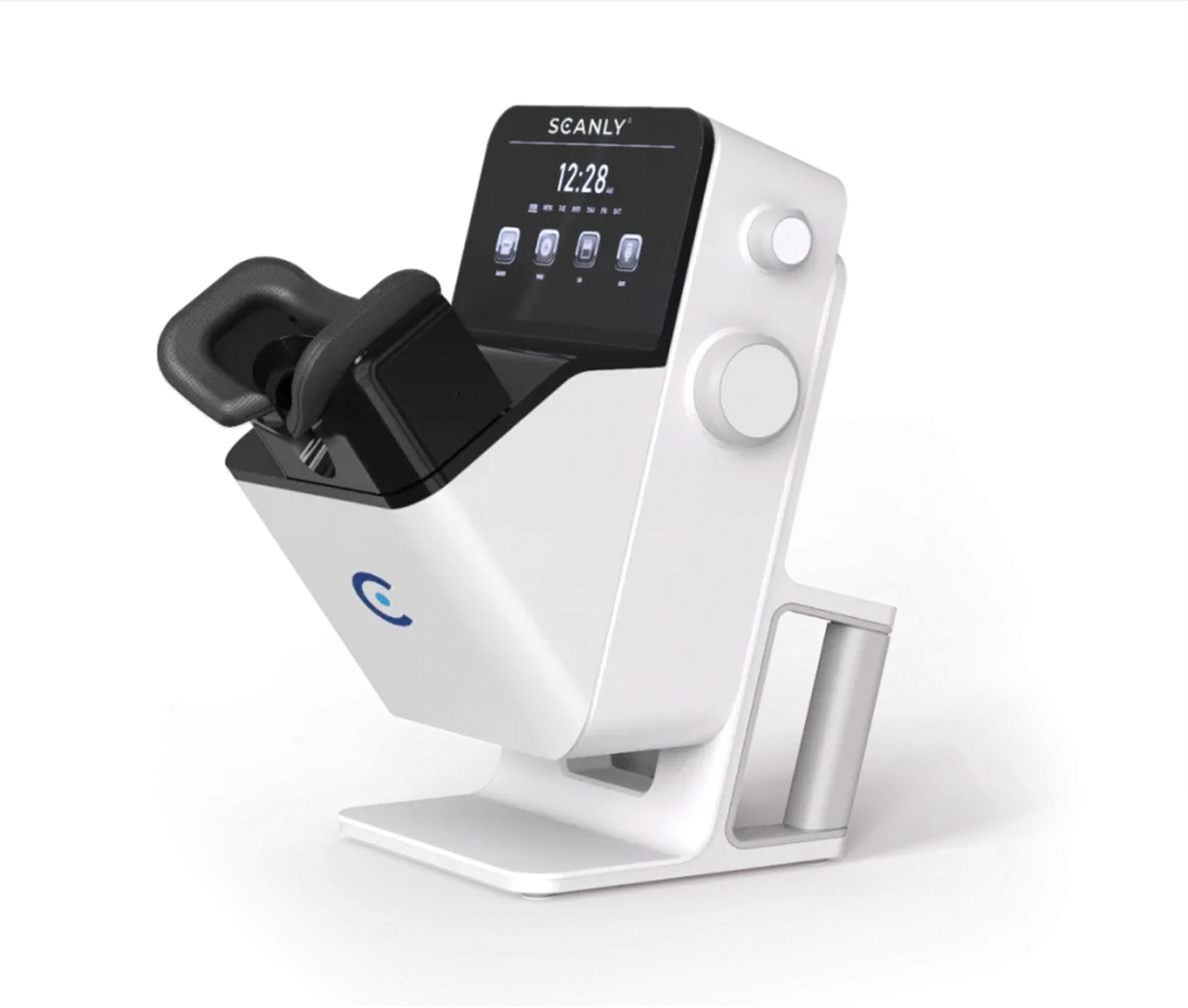
Figure 1. Notal Vision’s Scanly home optical coherence tomography (OCT) device, designed for use in patients with neovascular age-related macular degeneration, became commercially available in mid-2025. Image courtesy Notal Vision.
RP: Among your patients with wet AMD, what characteristics make someone a good candidate for home OCT monitoring?
Dr. Kapoor: Going into it, our biggest concern was about having something that we’re not doing directly in clinic that’s evaluating patients. We were also concerned about how user friendly it would be, how easily we could access the data, and whether we’d be troubleshooting issues without knowing how to help. But none of that turned out to be a problem. It was incredibly user friendly. Patients were strong endorsers. They found it easy to use and loved the peace of mind of having daily imaging that looked familiar to what they saw in clinic. Our ability to access the data was simple, and we always had Notal Vision as a third-party teammate. The whole process was very smooth and very easy.
RP: How was your experience with the initial implementation process—for both your team and your patients?
Dr. Kapoor: Practices can approach this in different ways, but we used our research wing, the Wagner Kapoor Research Institute, to implement it. They are used to onboarding patients into clinical trials, so they already have workflows, scripts, and consent processes in place. Treating this as a clinical trial–like integration was the most natural fit for us and worked extremely well.
I do think having a designated team member who understands the device is important. There’s always some level of patient anxiety with anything new. A teammate who knows the process inside and out helps reassure patients and makes adoption smoother. If the person introducing it isn’t confident, patients will sense that.
RP: Is there something you wish you had known before starting that you would tell another practice to keep in mind?
Dr. Kapoor: I was surprised by how positive the patient experience was. If I had known that earlier, I probably would have selected a couple of patients even sooner than I did. As we do with clinical trials that have multiple steps, I initially chose patients who I thought would be very flexible or very adaptable, who would be willing to jump over hurdles if necessary. Seeing how easy the process was and how great the patient experience was, I think I could have probably prescribed the device to just about anybody and it would’ve worked out well. The Scanly device is very easy for patients to use.
RP: How has access to home OCT data influenced your management decisions?
Dr. Kapoor: The biggest opportunity, I think, will lie in patients on longer-acting medicines. I would be more comfortable extending follow-up intervals when they’re monitored daily at home, especially in rural clinics. Having that continuous data gives me peace of mind and expands what’s possible for these patients.
RP: What clinical or practical benefits have you observed with home OCT monitoring?
Dr. Kapoor: The peace of mind it provides is significant—not only for patients but for their families, especially those living in remote areas. And we’ve already had a patient where home OCT detected fluid before any symptoms or vision changes occurred. That patient genuinely feels the device saved their vision, and their family feels the same. Those are big wins for everyone. I want to acknowledge my entire Wagner Kapoor Institute team for being flexible and willing to be early adopters. None of this is possible without that.
Looking ahead, as treatments last longer—whether through extended-duration injections or gene therapy—remote monitoring will be essential. It can alert us to changes early or provide surveillance for the fellow eye. Widespread adoption will be key. RP