





Systemic statin use was associated with a lower 1-year risk of proliferative vitreoretinopathy (PVR) and complex reoperation following retinal detachment (RD) repair, according to a retrospective study presented at the 59th annual meeting of the Retina Society in Los Angeles.
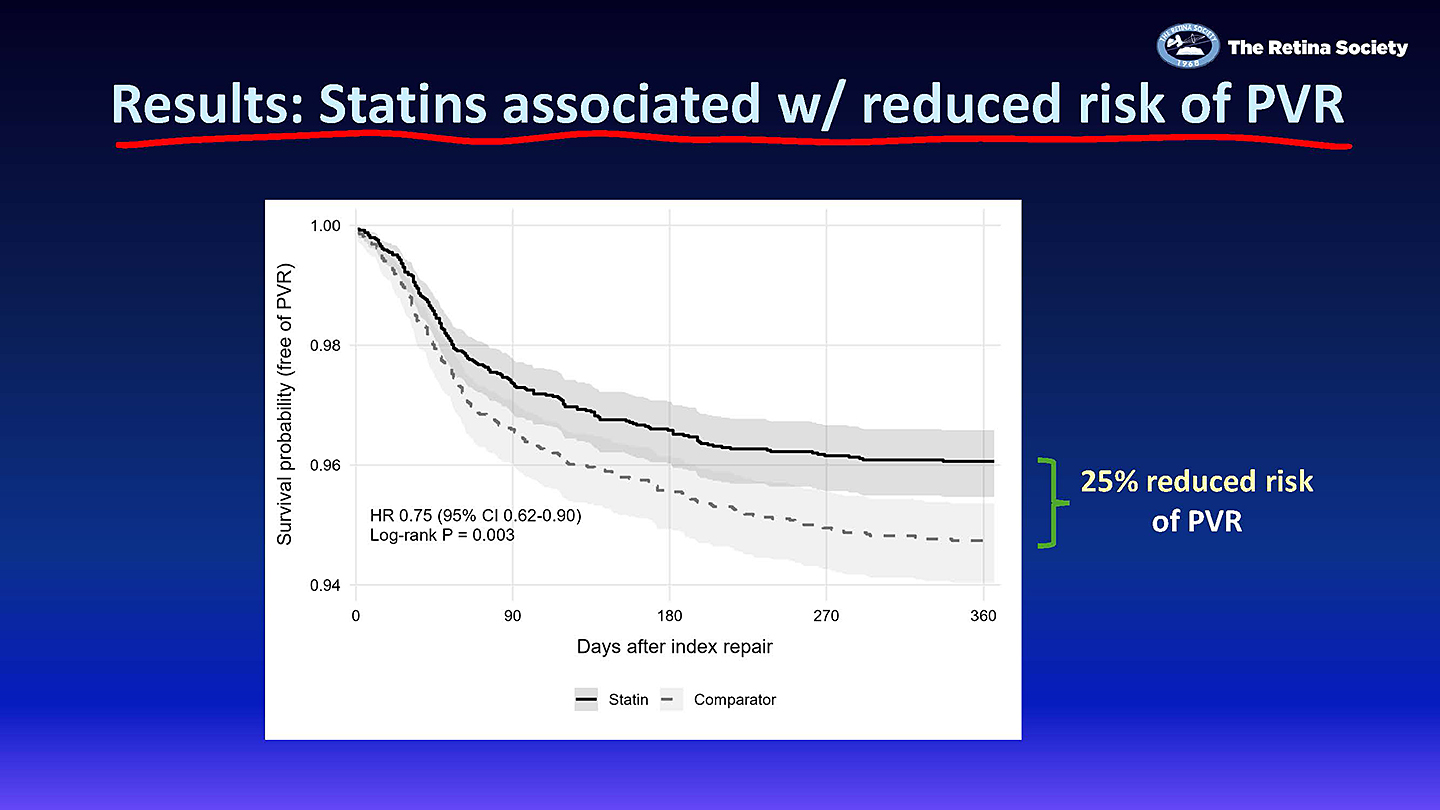
Figure 1. Systemic statin use was associated with a 25% lower 1-year risk of proliferative vitreoretinopathy (PVR) following retinal detachment repair.
“PVR, of course, is a dreaded complication among all of us vitreoretinal surgeons, but it’s common,” observed Christina Y. Weng, MD, MBA, of Baylor College of Medicine, noting that it historically occurs in 5% to 10% of RD repairs. “Unfortunately, we don’t have a great way of treating or preventing it yet.”
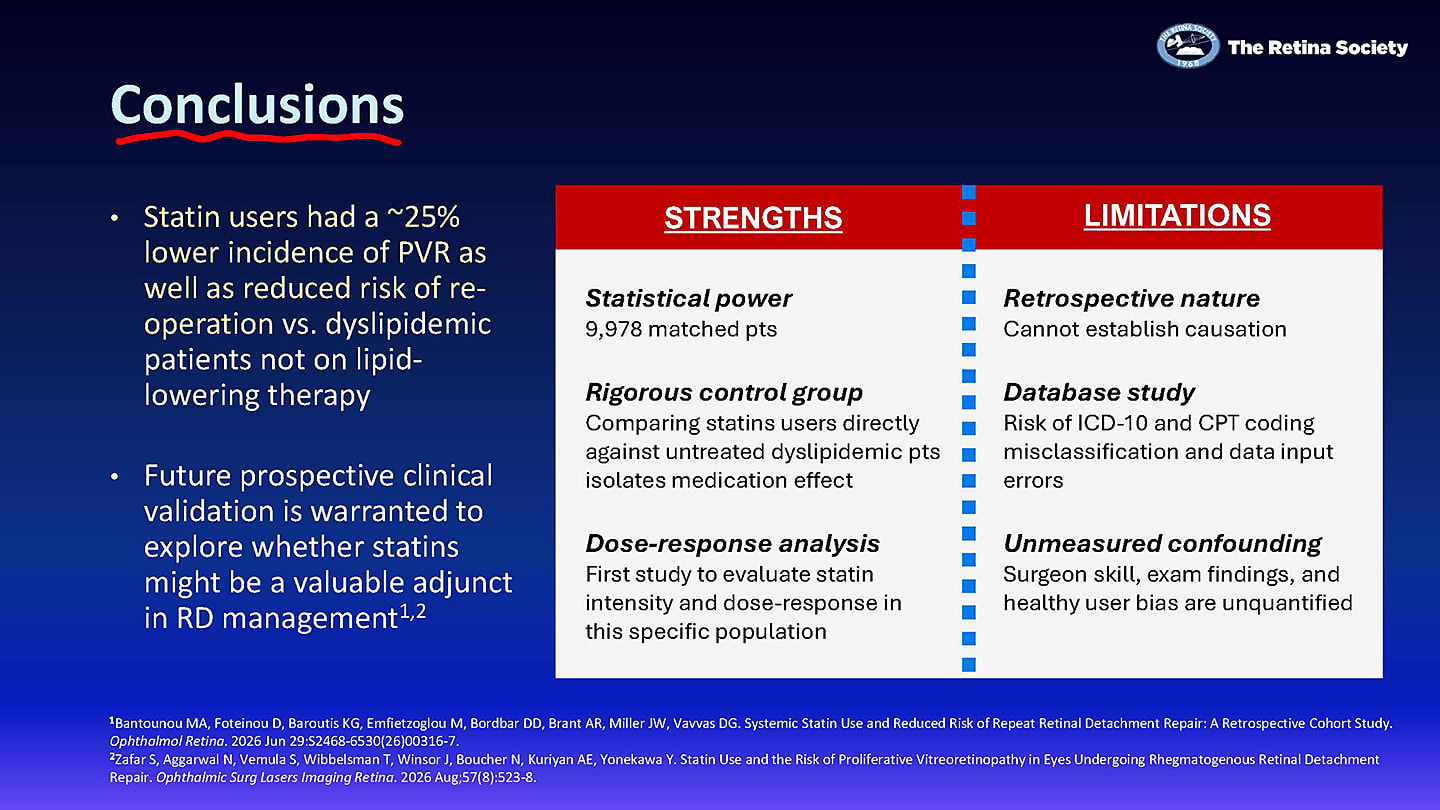
Dr. Weng explained that study investigators used the TriNetX network to identify patients with dyslipidemia who underwent primary RD repair. After 1:1 propensity score matching for factors that could influence PVR risk, the analysis included 9,978 patients—4,989 statin users and 4,989 untreated dyslipidemic controls. Patients in the statin cohort had received statin therapy at least within a year prior to the index repair.
Within 1 year of RD repair, PVR was identified in 3.8% of statin users compared with 4.7% of controls, corresponding to a 25% lower risk (P=.003) (Figure 1). Complex RD reoperation occurred in 8.2% and 9.1%, respectively (P=.018).
Further analysis suggested that the association may vary by statin intensity and pharmacologic characteristics, said Dr. Weng. High-intensity statin use was associated with lower PVR risk (P=.031), while medium- or low-intensity therapy was not. Lipophilic statins were also associated with lower PVR risk (P=.011), whereas hydrophilic statins were not.
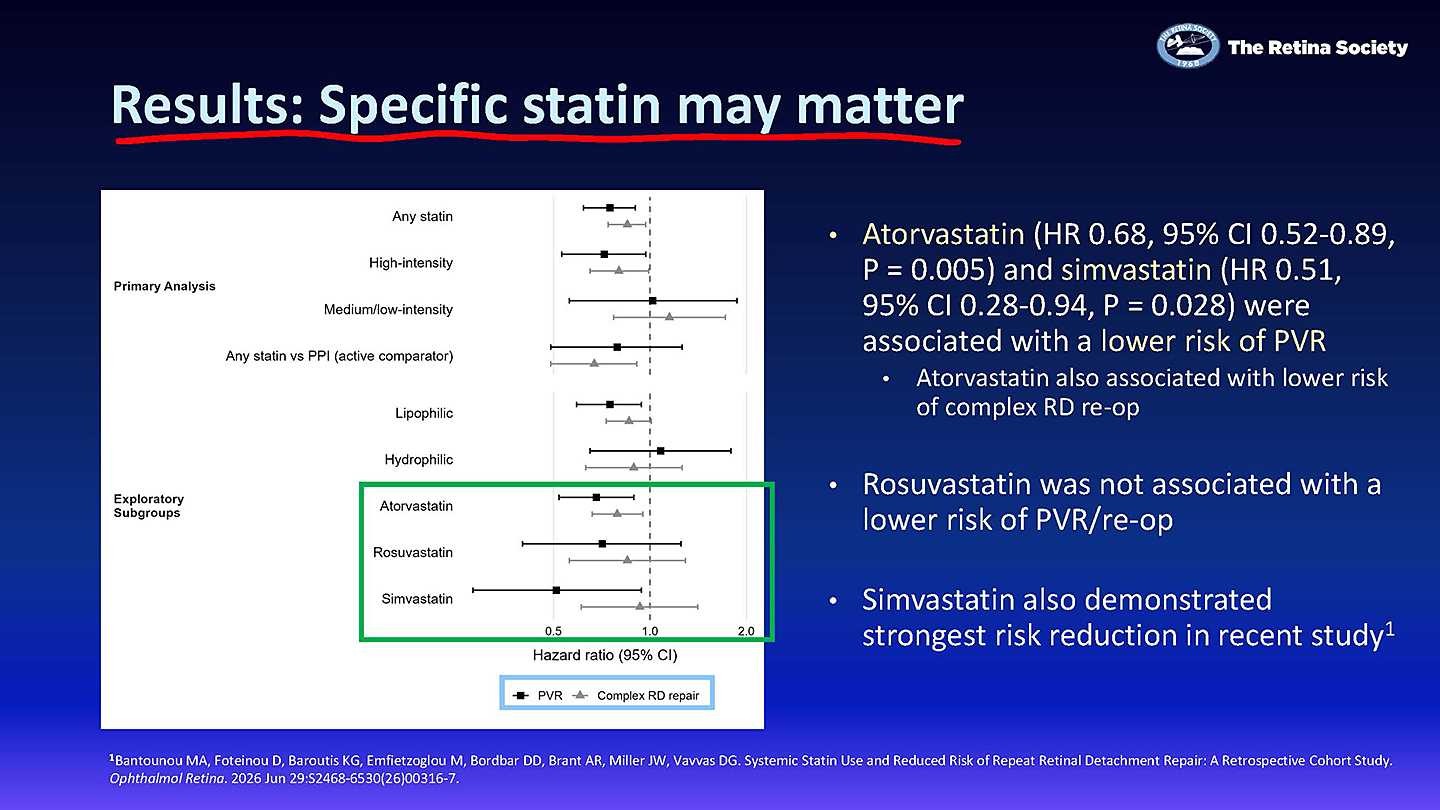
Figure 2. Exploratory analyses found that atorvastatin and simvastatin were associated with lower PVR risk, while rosuvastatin was not. Atorvastatin was also associated with a lower risk of complex retinal detachment reoperation.
Among individual agents, atorvastatin (P=.005) and simvastatin (P=.028) were associated with lower PVR risk, while rosuvastatin was not (Figure 2). Dr. Weng noted that another recent study found that simvastatin demonstrated the strongest risk reduction.1
During the discussion, Dr. Weng was asked whether the findings could support starting statin therapy around the time of RD repair. She said that while this retrospective analysis could not yet answer that question since the statin cohort had already been receiving treatment prior to surgery and the total duration of statin use was not available, prospective data certainly would.
“Given these results, along with the fact that statins are cost-effective and well tolerated, future study is warranted to further explore whether statins might have a viable role in the management of PVR,” Dr. Weng concluded. RP
References
1. Bantounou MA, Foteinou D, Baroutis KG, et al. Systemic statin use and reduced risk of repeat retinal detachment repair: a retrospective cohort study. Ophthalmol Retina. Published online June 29, 2026. doi:10.1016/j.oret.2026.06.024