



Clinical research activity in Argentina reached a record level in 2026, including a 117% increase in ophthalmology studies over the previous year, as regulatory changes altered the responsibilities of national authorities and research ethics committees. Guillermo Cardozo, president of the Comité de Ética en Investigación (CEIG), an Argentine research ethics committee that performs functions comparable to those of an institutional review board in the United States, reviewed these developments during the 2026 meeting of the Argentine Society for Retina and Vitreous (SARyV) in Ushuaia, Argentina.
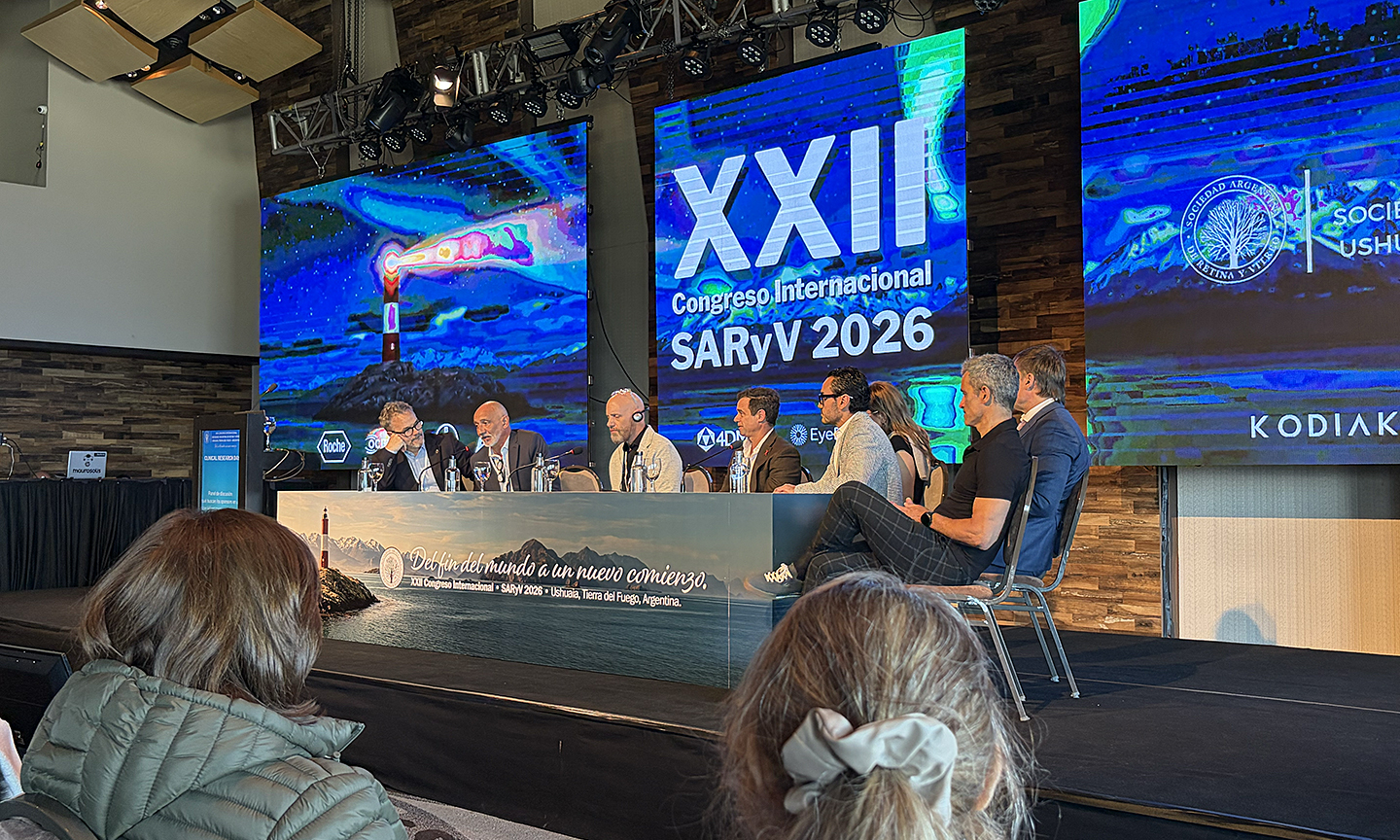
Figure 1. Guillermo Cardozo (second from left) participates in a panel discussion on improving clinical trial operations and research site performance in Argentina.
According to figures from Argentina’s National Administration of Drugs, Food, and Medical Technology (ANMAT), the agency approved 291 clinical pharmacology studies between January and September 2026, a 36% increase compared with the same period in 2025. The 9-month total exceeded the 290 studies approved during all of 2025. Ophthalmology also experienced increased research activity, as Cardozo presented figures showing that 13 ophthalmology studies were submitted between January and October 2026, compared with 6 in 2025 and 7 in 2024.
Despite this growth, research activity remains concentrated geographically, he pointed out. Argentina has 1,287 research centers across its 23 provinces and the autonomous city of Buenos Aires, although only 297 were identified as actively conducting research—including 90 centers participating in just one study. More than half of the country’s research centers are concentrated in the city of Buenos Aires and the surrounding province.
Among ophthalmology research facilities, 32 centers were identified across 9 provinces. More than 65% were located either in the city of Buenos Aires (16) or the surrounding province (5). Other areas with multiple ophthalmology research centers included Córdoba (3), Mendoza (2), and Santa Fe (2).
Regulatory Changes
A central focus of Cardozo's presentation was ANMAT Disposition 7516/2025, which established a revised regulatory framework for clinical pharmacology studies and adopted the International Council for Harmonization’s ICH E6(R3) Good Clinical Practice guidelines. The regulation, which became effective on December 1, 2025, applies to specified phase 1 through 3 drug studies intended to support regulatory registration.
One significant change concerns the relationship between ANMAT and research ethics committees. Previously, sponsors generally obtained ethics committee approval before submitting a study to ANMAT. Under the revised process, submissions to the regulatory authority and ethics committee may proceed in parallel, Cardozo said.
The revised framework also clarifies the respective responsibilities of ANMAT and research ethics committees. ANMAT conducts the national regulatory review of clinical study protocols, while research ethics committees assume responsibility for evaluating informed consent documents and other participant-facing materials.
For investigators and research centers, the revised procedures establish different pathways for site authorization or notification, depending on the jurisdiction, the investigational product, and other regulatory considerations, Cardozo said.
Continuing Challenges
Cardozo identified differences among provincial regulations as an obstacle to efficient study initiation. Documentation requirements and approval procedures vary by jurisdiction, while response times from sponsors and research centers can also affect ethics committee reviews.
He described CEIG’s review process, which uses specialized teams with experience in ophthalmology and other medical disciplines. According to the presentation, CEIG generally provides initial responses and reviews sponsor replies within 2 to 5 business days, although this does not necessarily represent the time required for final approval.
Cardozo also emphasized the need to expand clinical research beyond major urban centers and provide continuing training for investigators and research teams. Although regulatory reforms may streamline study submissions, differences among jurisdictions and the concentration of research facilities remain challenges to broader participation in clinical research across Argentina, he said.
The presentation was followed by a panel discussion examining what clinical trial sponsors look for when selecting research sites in Latin America and where regional centers could improve. Participants included Pablo Velázquez, MD; Rodrigo Santos, MD; Romina Figueroa, MD; Matko Vidosevich, MD; David P. Bingaman, MD; and Gastón Gómez Caride, MD. RP